Odu Oyeku: Meaning, Symbolism & Message
Oyeku symbolizes transformation and change. It brings lessons of adaptability and resilience.
 olamilekan
3 min read
3,517 views
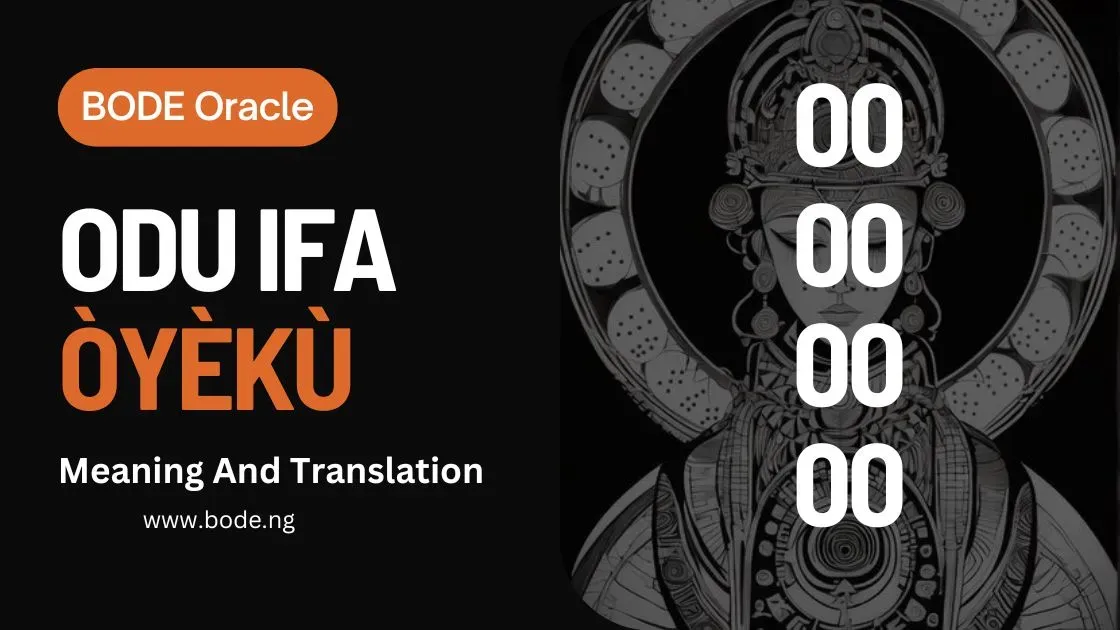
Oyeku: The Odu of Endings, Transformation and New Beginnings
Oyeku, known as the Mother of the Spirit of Death, derives from the phrase O yeye Iku, which translates to Spirit of the Mother of Death. This Odu embodies the essence of darkness, representing the total contraction of matter, akin to what physics describes as a black hole. In human terms, Oyeku can signify physical death; however, it more commonly denotes the conclusion of a cycle.
What Oyeku Represents
Oyeku is the principle of closure. Where Ogbe speaks of light, opening and the first breath of creation, Oyeku speaks of night, stillness and the drawing in of everything that has run its course. It is not a malevolent Odu. It is a truthful one. Oyeku arrives when something must end for something else to be born, and it will not pretend otherwise.
Because Oyeku governs both the finality of death and the fertility of the grave, it carries a double charge. In its positive aspect it clears away what has become stagnant, releases a person from an obligation that no longer serves them, and makes room for a genuinely new chapter. In its negative aspect it manifests as resistance to change, a refusal to let go, and the slow decay that follows when a person clings to a finished season.
When Oyeku Appears in Divination
For whom Oyeku appears, the reading is rarely about the surface question alone. It asks the querent to name what has ended. A relationship, a role, a business, a way of understanding themselves. Ifa teaches that the suffering attached to Oyeku almost always comes from arguing with a conclusion that has already been reached.
Where Oyeku appears alongside other Odu, its meaning shifts with its position. When it opens a consultation it signals that the matter begins with a loss or a closure that must be acknowledged first. When it closes a consultation it warns that without proper attention the matter will end in a way the querent does not choose.
How to Work With Oyeku
The instruction attached to Oyeku is usually one of preparation and respect. It calls for quiet reflection, for tending to the dead and the ancestral line, and for making peace with what is finishing rather than fighting it. Ritual and sacrifice, where prescribed, are not bribes. They are acts of alignment that allow the transition to occur without harm.
Oyeku teaches that darkness is not the opposite of light but its precondition. Every ending it announces is also a doorway. Those who accept its message move through the doorway. Those who refuse it remain standing in a room that no longer has walls.
Oyeku and the 16 Mother Odus
Oyeku stands second among the sixteen principal Odu, and its pairing with any of the others gives birth to the remaining two hundred and forty Odu of the Ifa corpus. It is distinct from Oyeku Meji, which is Oyeku doubled and carries its own separate interpretation. Understanding that distinction is essential to reading Ifa accurately.
No comments yet. Be the first to comment.