
Best African Fantasy Books Like Children of Blood and Bone
Looking for more African fantasy books like Children of Blood and Bone? Here are the best novels drawing on African mythology, history and culture — from Nnedi Okofor to Namina Forna.
 olamilekan
3 min read
27 views
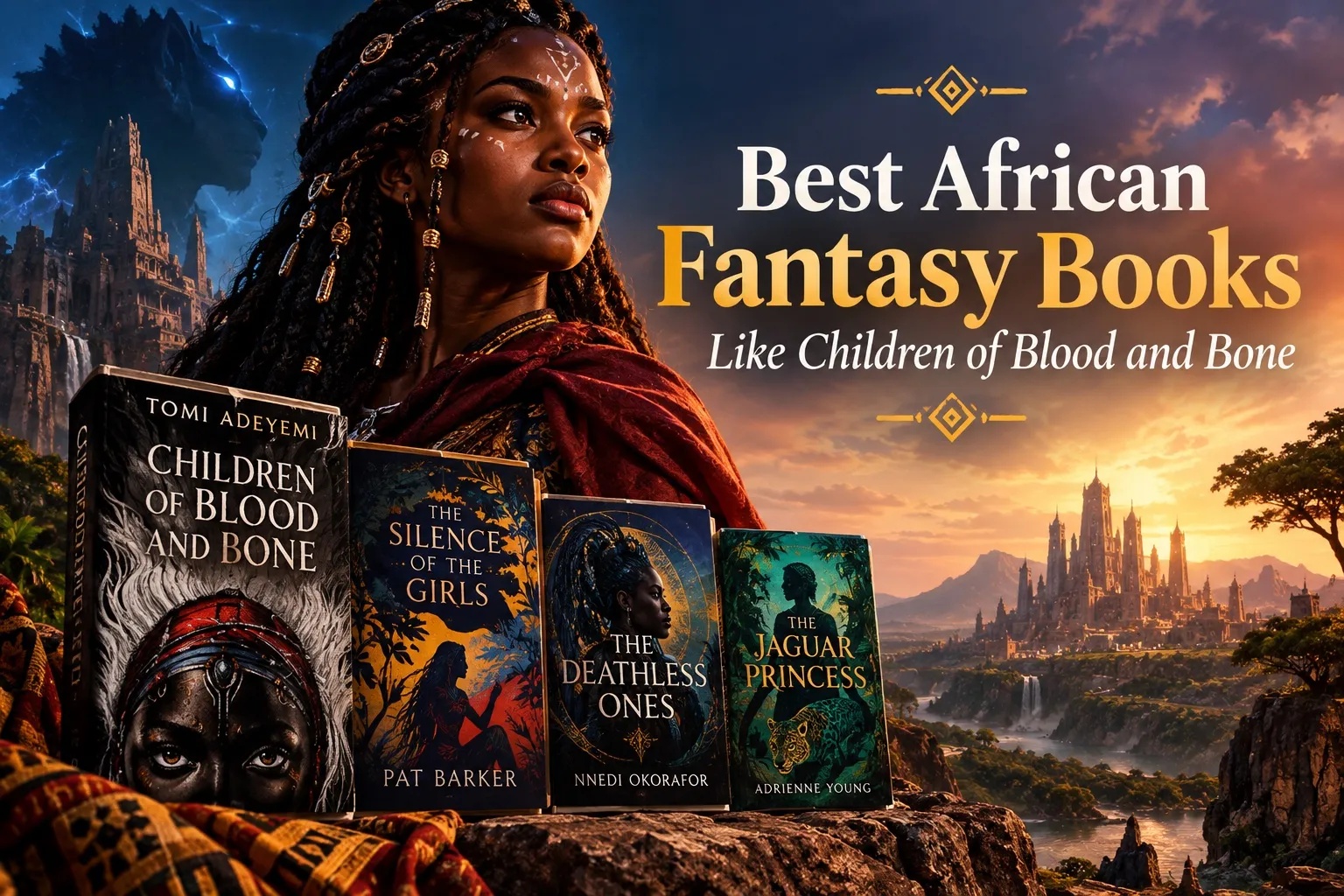
Here are the books that belong on the shelf beside Adeyemi's trilogy, whether you are a reader who came to them through her work or arrived by other routes.
Who Fears Death by Nnedi Okofor (2010)
Nnedi Okofor is the foundational figure of Afrofuturism and African speculative fiction in the Western literary market.
Who Fears Death is set in a post-apocalyptic Sudan-inspired landscape and follows Onyesonwu — a mixed-race woman born of wartime rape — who develops magical powers in a world structured by ethnic violence.
It is dark, uncompromising, and rooted in West African spiritual tradition in ways that Adeyemi explicitly acknowledged as an influence.
Okofor has also written Akata Witch (2011) and its sequels, which are considerably lighter in tone and more appropriate for young adult readers, following a Nigerian-American girl who discovers she is part of a secret world of African magic in Nigeria.
The Gilded Ones by Namina Forna (2021)
Set in a West African-inspired world structured by religious oppression of women, The Gilded Ones follows Deka, a girl who discovers she is a supernatural warrior.
It carries clear DNA from Children of Blood and Bone — the young female protagonist, the mythology-rooted world, the exploration of how power structures crush those they define as other.
Forna, a Sierra Leonean-American author, brings her own cultural specificity to material that builds on the path Adeyemi marked out.
Children of the Quicksands by Efua Traoré (2021)
A Nigerian-German author bringing Yoruba mythology specifically to the page — Children of the Quicksands is rooted in the world Adeyemi drew from.
It follows a teenage girl sent to Nigeria to live with her grandmother who discovers a magical world connected to a sacred lake. For readers who specifically want more Yoruba mythology, this is essential.
An Ember in the Ashes by Sabaa Tahir (2015)
Technically Roman-inspired rather than African, Sabaa Tahir's series is one Adeyemi herself has cited as an influence.
It shares the DNA of Children of Blood and Bone: the oppressed protagonist, the complex antagonist, the forbidden romance under impossible circumstances.
Tahir is a Pakistani-American author, and the series' sensitivity to how empire destroys the people it swallows is present on every page.
A Song of Wraiths and Ruin by Roseanne A. Brown (2020)
Drawing on West African mythology — specifically from Ghana and Nigeria — Brown's debut novel follows two protagonists on a collision course at a festival in a North African-inspired world.
It shares Children of Blood and Bone's commitment to drawing mythology from specific real traditions rather than a generic "African" backdrop.
The Death of Vivek Oji by Akwaeke Emezi (2020)
Not fantasy in the traditional sense, but Emezi's work blurs the boundary between realism and spiritual reality in ways that resonate with Adeyemi's world-building.
Set in Nigeria and drawing on Igbo Ogbanje mythology — the concept of spirit children who cycle between death and rebirth — it places African spiritual frameworks at the centre of a gripping literary mystery.
Frequently Asked Questions
Are there more books in Tomi Adeyemi's world after the trilogy?
As of publication, no additional Legacy of Orïsha books have been announced.
Who is the founder of Afrofuturism in literature?
The term Afrofuturism was coined by cultural critic Mark Dery in 1994, but the literary tradition is older. Nnedi Okofor is considered a central figure in its contemporary literary expression.
No comments yet. Be the first to comment.