
Ogbe Owonrin: Meaning, Stories & Interpretation
Explore the meaning and interpretation of Ogbe Owonrin in Ifa Divination.
 olamilekan
10 min read
1,177 views
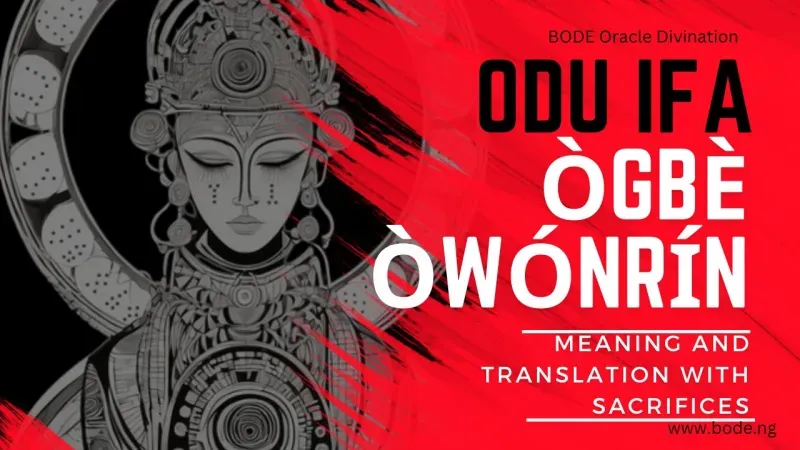
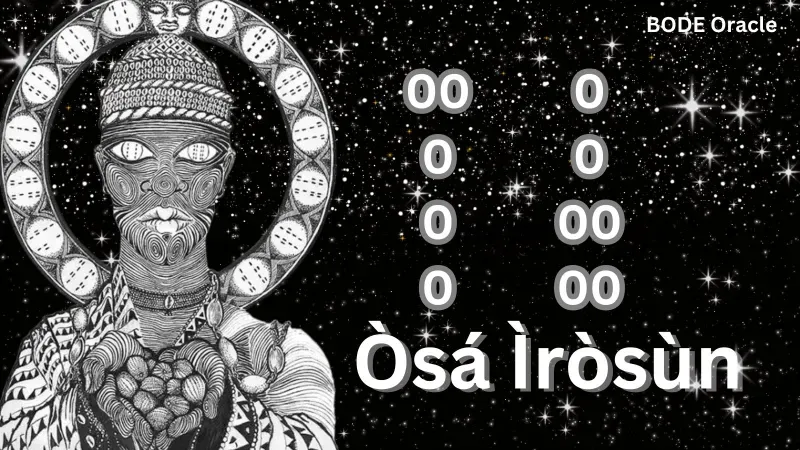
This Odu emphasizes the consequences of neglecting one's responsibilities and the impact of decisions made in moments of doubt.
The teachings of Ogbe Owonrin encourage individuals to remain aware of their surroundings, to respect the wisdom of Ifa, and to make sacrifices when necessary to ensure the well-being of themselves and their loved ones.
Ultimately, it is a call to be proactive in safeguarding one's relationships and spiritual health.
Ogbe Owonrin, Ogbe Wunle: Ifa Elediro
Ifa says that the one who receives Ogbe Wunle should offer sacrifice so that illness will not afflict their children.
Ifa warns against disobedience and emphasizes that sacrifice is required.
Ite gudugbe
This was the Ifa cast for Elediro.
The Elediro referred to here is a hen. In ancient times, a severe head illness was affecting its chicks, so it went to consult Ifa. The priests told it to offer sacrifice, and it was chosen as the required sacrifice.
However, in stubbornness, it ignored the advice and did not offer the sacrifice. As a result, the illness among its chicks worsened. The head illness eventually led to the death of the chicks. Before their deaths, however, they realized that their mother had failed to perform the required sacrifice.
Ogbe Owonrin, Ogbe Wunle: Ifa Molujanjan, the Child of Oluigbo
Ayegbe hin
Ayegbe ohun
This was the Ifa cast for the animals on the day they were competing to marry Molujanjan, the child of Oluigbo.
Ayegbe ohun
This was the Ifa cast for Oore Segi-Segi (the rodent that breaks wood) on the day they were competing to marry Molujanjan, the child of Oluigbo.
The Molujanjan referred to by Ifa is the child of Oluigbo. When it was time for her to marry, the animals began to compete for her hand, each one claiming that it would be her husband.
Among the animals were the elephant, buffalo, antelope, and Oore (the rodent). Oluigbo decided to test them. He said that whoever Molujanjan collects the orange from would marry her. The other animals went to consult Ifa.
They were advised to offer sacrifice. Only Oore made the sacrifice, while the other animals did not. The elephant, buffalo, and antelope believed they would win without making the sacrifice.
Oore went ahead and bought the orange. The orange that Oore bought was the one for which the Ifa priests performed the rites. Time passed, and all the animals gathered, singing their songs, trying to encourage Molujanjan to collect the orange from them.
The elephant was the first to sing:
"Molujanjan, come and collect the orange, alujanjan-kijan"
"Molujanjan, come and collect the orange, alujanjan-kijan"
"I am the elephant, the leader of the forest, alujanjan-kijan"
"Molujanjan, come and collect the orange, alujanjan-kijan"
But Molujanjan did not collect the orange from the elephant. Then the buffalo stepped forward and sang:
"Molujanjan, come and collect the orange, alujanjan-kijan"
"Molujanjan, come and collect the orange, alujanjan-kijan"
"Elephant is the Leader of the forest, alujanjan-kijan"
"I am the buffalo, the son of Odofin, alujanjan-kijan"
"Molujanjan, come and collect the orange, alujanjan-kijan"
Still, Molujanjan did not collect the orange from the buffalo. Then the antelope sang:
"Molujanjan, come and collect the orange, alujanjan-kijan"
"Molujanjan, come and collect the orange, alujanjan-kijan"
"Elephant is the Leader of the forest, alujanjan-kijan"
"Buffalo, is the son Odofin, alujanjan-kijan"
"I am the antelope, the son of Abila, alujanjan-kijan"
"Molujanjan, come and collect the orange, alujanjan-kijan"
But Molujanjan did not collect the orange from the antelope. Finally, Oore (the rodent) sang:
"Molujanjan, come and collect the orange, alujanjan-kijan"
"Molujanjan, come and collect the orange, alujanjan-kijan"
"Elephant is the Leader of the forest, alujanjan-kijan"
"Buffalo, is the son of Odofin, alujanjan-kijan"
"Antelope is the son of Abila, alujanjan-kijan"
"I am Oore, Our Servants, alujanjan-kijan"
"Molujanjan, come and collect the orange, alujanjan-kijan"
Molujanjan ran to Oore and collected the orange from him. She exclaimed, "This means you are not their servant," and Oore affirmed that he was indeed not their servant.
Thus, Oore married Molujanjan, the child of Oluigbo, because he made the sacrifice to Ifa. The Ifa rites performed for the orange ensured that Oore would win Molujanjan over the other animals.
Divination Instruction
This Ifa teaches us not to underestimate others. Ifa says that whoever receives Ogbe Wunle should offer sacrifice to gain favor and respect from others.
Ogbe Owonrin: Ifa for Yeemoo, the Woman of the Orisa
Egbirin is the awo (diviner) of the domestic dog
This was the Ifa cast for Yeemoo,
The wife of the Orisa,
On the day she was lamenting that she could not bear children.
The Yeemoo referred to in this Ifa verse is a woman from ancient times. She had tried for a long time but could not conceive; the desire for children consumed her greatly.
In her desperation, she took an offering of two into three and went to consult the Ifa priests. Ifa told her to offer a sacrifice, assuring her that she would bear many children. The diviners chose the sacrifice for her, and Yeemoo performed the offering.
Olodumare heard her cries and sent her sixteen children from the heavens.
Thus, Yeemoo became a mother and praised the Awo (diviners), the Awo praised Ifa, and Ifa praised Olodumare.
Divination Instruction
Ifa says that whoever receives Ogbe-Wunle should offer a sacrifice to ensure abundant children and should not ignore the significance of the offering. Ifa promises the blessing of children to the seeker.
Ogbe Owonrin: Ifa for Porogodo, the Wife of the Woodpecker
Ifa says that whoever receives Ogbe-Wunle should offer a sacrifice so that their spouse is not taken from them, either by force or circumstance. Ifa also advises that the person should avoid falling into defeat.
We weave the roof first
Before weaving the walls
This was the Ifa cast for Porogodo,
The wife of the woodpecker.
The Porogodo mentioned in this Ifa verse is the wife of the woodpecker. The woodpecker, suspicious that someone wanted to take his wife, sought guidance. Ifa advised him to perform a sacrifice.
However, the woodpecker refused to offer the sacrifice, insisting that instead of doing the ritual, he would rely on his cleverness. The woodpecker then used his beak to hollow out a hole in a tree and hid his wife inside, sealing the hole tightly.
But because of his disobedience and arrogance, the woodpecker later forgot the exact spot where he had hidden his wife.
Since that day, the woodpecker has roamed the earth tapping on trees with his beak, distressed and endlessly calling out "porogodo, porogodo" as he searches for his wife in vain.
YORUBA Translation
Ogbe Owonrin, Ogbe Wunle: Ifa Elediro
Ifa ni eni ti o da Ogbe wunle ki o ru'bo ki arun ki o ba Ma a se awon omo re.
Ifa pe ki eninan o ma se aigboran. Ifa pe ebo ni ko'ru
Ite gudugbe
Lo d'Ifa fun Elediro
Elediro ti Ifa so yii, adiye ni. Ni aye atijo, arun ori nse awon omo re, ni o ba lo bere l'odo Ifa. Awon Awo ni ki o ru'bo, won yan an l'ebo. Sugbon o fi gbigbo se alaigbo, ko ru'bo. Ni arun awon omo re ba tun po si.
Bayii ni arun ori yii se npa awon omo re. Sugbon ki o to di wipe won o ma fi orun yi'le, won o mo wipe, iya awon ni ko s'ebo.
Ogbe Owonrin: Ifa Molujanjan Omo Oluigbo
Ayegbe hin
Ayegbe ohun
A d'Ifa fun erinlojo eranko
L'ojo ti won nlo ree fe Molujanjan mo uluigbo
Ayegbe ohun
A d'Ifa fun oore segi-segi
L'ojo to nlo ree fe Molujanjan omo oluigbo
Molujanjan ti Ifa so yii, omo oluigbo nii se. o to akoko ti yi oo ni oko, ni awon eranko ba nja l'ori i re. Ekini wipe oun l'oun o fe, ekeji naa wipe oun ni oun yo fe. Awon eranko bi erin, efon, agbonrin, oore. Ni oluigbo ba ni oun o se idanwo fun won.
Eni ti omo oun ba dimo, to gba osan l'owo re ni yi oo fe. Ni awon eranko yoku ba lo da'fa. Won ni ki won o ru'bo. Oore nikan lo ru'b. Awon eranko yoku o ru'bo.
Won ni bi eni gbogbo yi oo ma ba awon fi ori gba'ri. Erin ni "Nibiti mo wa" efon naa ni "nibiti mo wa, "agbonrin naa wi bee, Won l'awon o ru'bo.
Ni oore ba ra osan, san ti oore ra ni awon Awo ba se Ifa si. Gbogbo eranko da'jo, ojo pe. Gbogbo won ba pejo: ni won ba nkorin. Erin lo koko yo 'ju, o k'orin wipe:
Molujanjan wa gb'osan o, alujanjan-kijan
Molujanjan wa gb'osan o, alujanjan-kijan
Emi erin ma de asalu (olori igbo), alujanjan-kijan
efon l'omo abila o, alujanjan-kijan
Oore l'eru awa, alujanjan-kijan
Molujanjan wa gb'osan o, alujanjan-kijan
Molujanjan ko dahun, ko gba osan l'owo erin. Ni efon ba Bo sibe, ni oun naa ba bere si ni k'rin.
Molujanjan wa gb'osan o, alujanjan-kijan
Molujanjan wa gb'osan o, alujanjan-kijan
erin ni olori igbo, alujanjan-kijan
Emi efon l'omo odofin, alujanjan-kijan
Agbonrin l'omo abila o, alujanjan-kijan
Oore l'eru awa, alujanjan-kijan
Molujanjan wa gb'osan o, alujanjan-kijan
Mlujanjan ko dahun, ko gba osan l'ow efon. Ni agbonrin Ba b sibe, ni oun naa ba bere si ni k'orin:
Molujanjan wa gb'osan o, alujanjan-kijan
Molujanjan wa gb'osan o, alujanjan-kijan
erin ni olori igbo, alujanjan-kijan
efon l'omo odofin, alujanjan-kijan
Emi agbonrin l'om abila o, alujanjan-kijan
Oore l'eru awa, alujanjan-kijan
Mlujanjan wa gb'osan o, alujanjan-kijan
Molujanjan ko dahun, ko gba osan l'owo agbonrin. Ni oore Ba bo sibe, ni oun naa ba bere si ni k'orin:
Molujanjan wa gb'osan o, alujanjan-kijan
Molujanjan wa gb'osan o, alujanjan-kijan
erin ni olori igbo, alujanjan-kijan
Efon l'omo odofin, alujanjan-kijan
Agbonrin l'omo abila o, alujanjan-kijan
Emi oore l'eru awa, alujanjan-kijan
Molujanjan wa gb'san o, alujanjan-kijan
Ni Molujanjan ba sare, ni o wipe, "Iyen ni wipe iwo kii se eru awon yi" oore ni oun kii se eru won.
Bayii ni oore fe Molujanjan omo oluigbo nipa irubo Ifa ati iye Ifa ti won pe si osan, o je ki osan ti oore wo Molujanjan l'oju.
Bayii ni oore fe Molujanjan mo awon eranko yoku l'owo.
Ase: Ifa yii ko wa pe ki a ma foju tembelu eni keji i wa. Ifa pe eni ti o da Ogbe-wunle ki o ru'bo ki o le ba gbayi l'wo awon iyoku re.
Ogbe Owonrin: Ifa Yeemoo Obinrin Orisa
Egbirin l'awo aja ile
A d'Ifa fun yemoo
Ti i se obinrin Orisa
L'ojo ti o nsunkun pe oun ko bi'mo
Yemoo ti Ifa nso yii, obinrin ni ni aye atijo. Ose titi ko ri omo bi: oju omo pon pupo. Ni o ba mu eeji kun eeta o lo si oko awo.
Ifa pe ko ru'bo. Yi oo bi'mo pupo. Won yan an l'ebo. Yemoo ru'bo.
Olodumare si gbo ohun un re, o si fi omo merindinlogun ranse si lati ode orun. Bayii ni yemoo di olomo. O si nyin Awo, awon Awo nyin Ifa, Ifa si nyin Olodumare.
Ase: Ifa pe emi ti o da Ogbe-Wunle ki o ru'b omo lopolopo; ki o si ma fi eti palaba ebo naa. Ifa pe oun pe ire omo fun eleyiun.
Ogbe Owonrin: Ifa Porogodo Aya Eiye Akoko
Ifa pe eni o da Ogbe-Wunle ki o ru'bo, ki won ba ma gba oko mo l'owo, tabi gba iyawo o re. Ifa pe ki eleyiun ki o ma dejaa.
Imu ile la a hun
Ki a to ma hun ode
A d'Ifa fun porogodo
Tii se obinrin akoko.
Porogodo ti Ifa so yii, obinrin akoko ni i se, Akoko fura wipe won fe gba Iyawo oun ni o ba lo se ayewo. won ni ebo ni ki akoko o ru.
Sugbon akoko ko ru'bo: o ni kaka ki oun o ru'bo, ogbon ni oun o ta.
Ni akoko ba lo fi enu gbe iho si ara igi kan, ni o ba lo gbe iyawo re pamo si inu iho igi yii, ni o ba di i pa. ugbon gege bi aigbonran ati eja dida, akoko pada de ibi igi ko mo oju ibiti o gbe iyawo re si mo.
Lati akoko yii ni akoko ti ma a fi enu so igi kaakiri aye, ti idaamu si ba, ti yi oo ma wipe "porogodo, porogodo".
No comments yet. Be the first to comment.