Yoruba Orisha Explained for Readers of Children of Blood and Bone
Who are the Orishas in Children of Blood and Bone? This guide explains Oya, Yemoja, Shango, Ogun and more — the real divine figures behind Tomi Adeyemi's fantasy world.
 olamilekan
3 min read
11 views
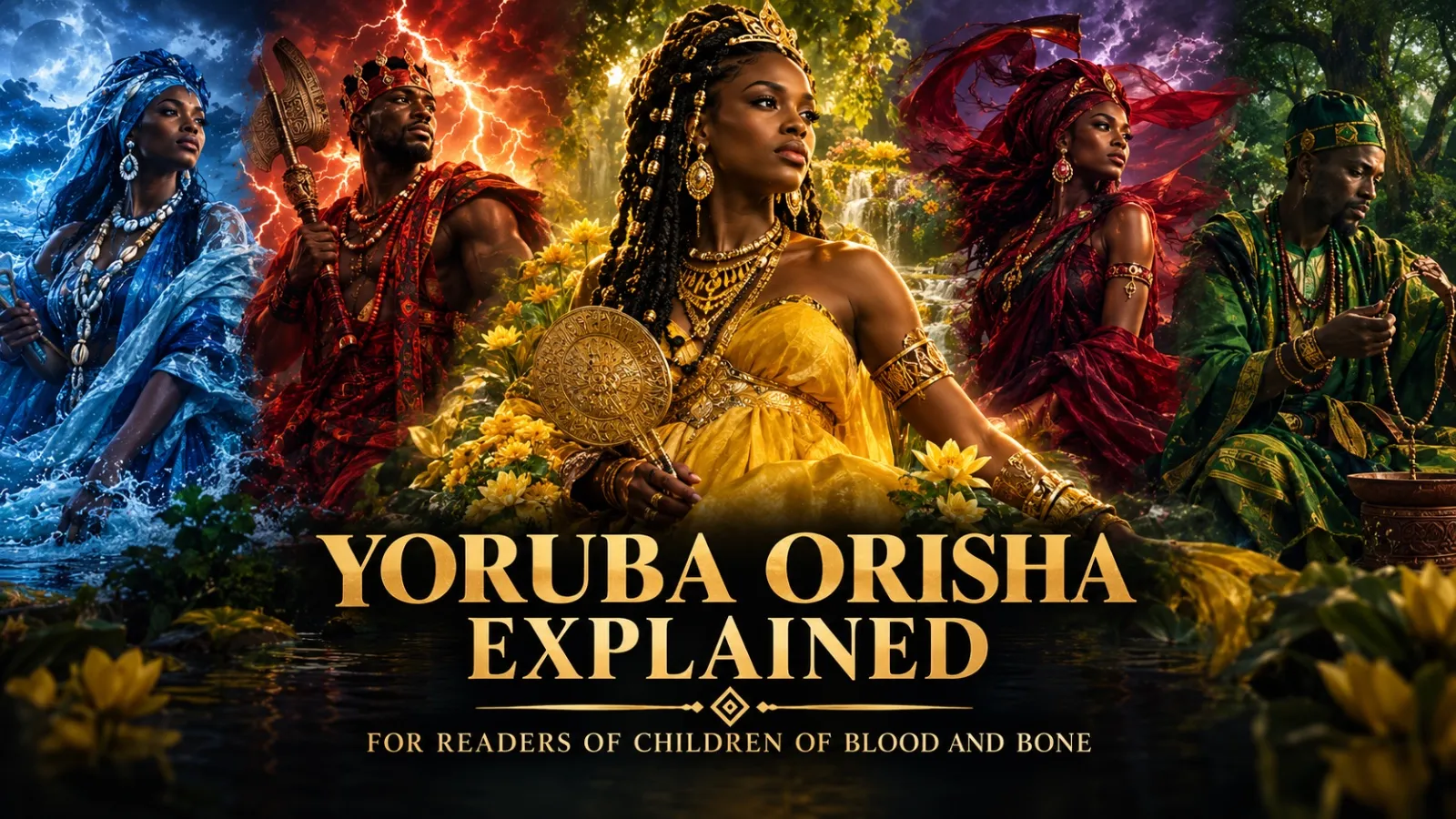
The Orishas are real. They are divine intermediaries from the Yoruba religion, one of Africa's oldest and most globally influential spiritual traditions.
Originating among the Yoruba people of what is now southwestern Nigeria and the Republic of Benin, Yoruba religion was carried to the Americas through the transatlantic slave trade and survives today in Candomblé (Brazil), Santería (Cuba), Trinidad Orisha, and other diaspora traditions with millions of active practitioners.
Oya: Zélie's Orisha
Oya is the Orisha of storms, wind, change, and the transition between life and death. She rules the Niger River and is associated with violent weather, the marketplace, and the grave. She is a warrior, a mother, and a force of transformation.
For Zélie — whose mother was killed by the state, who channels grief into power, who stands at the intersection of destruction and renewal — the alignment with Oya is precise.
Oya is not a gentle deity. She is the kind of divine figure who reshapes the world through force.
Yemoja: Goddess of Water and Fertility
Yemoja is the Orisha of the ocean, rivers, and fertility. She is considered the mother of many other Orishas — a foundational figure whose waters sustain all life. In the novel, clans aligned with Yemoja draw water-based powers.
Her name is derived from the Yoruba phrase Yèyé omo eja — "mother whose children are like fish" — referring to the immensity of the ocean and the children she nurtures within it.
Shango: Thunder, Lightning, and Justice
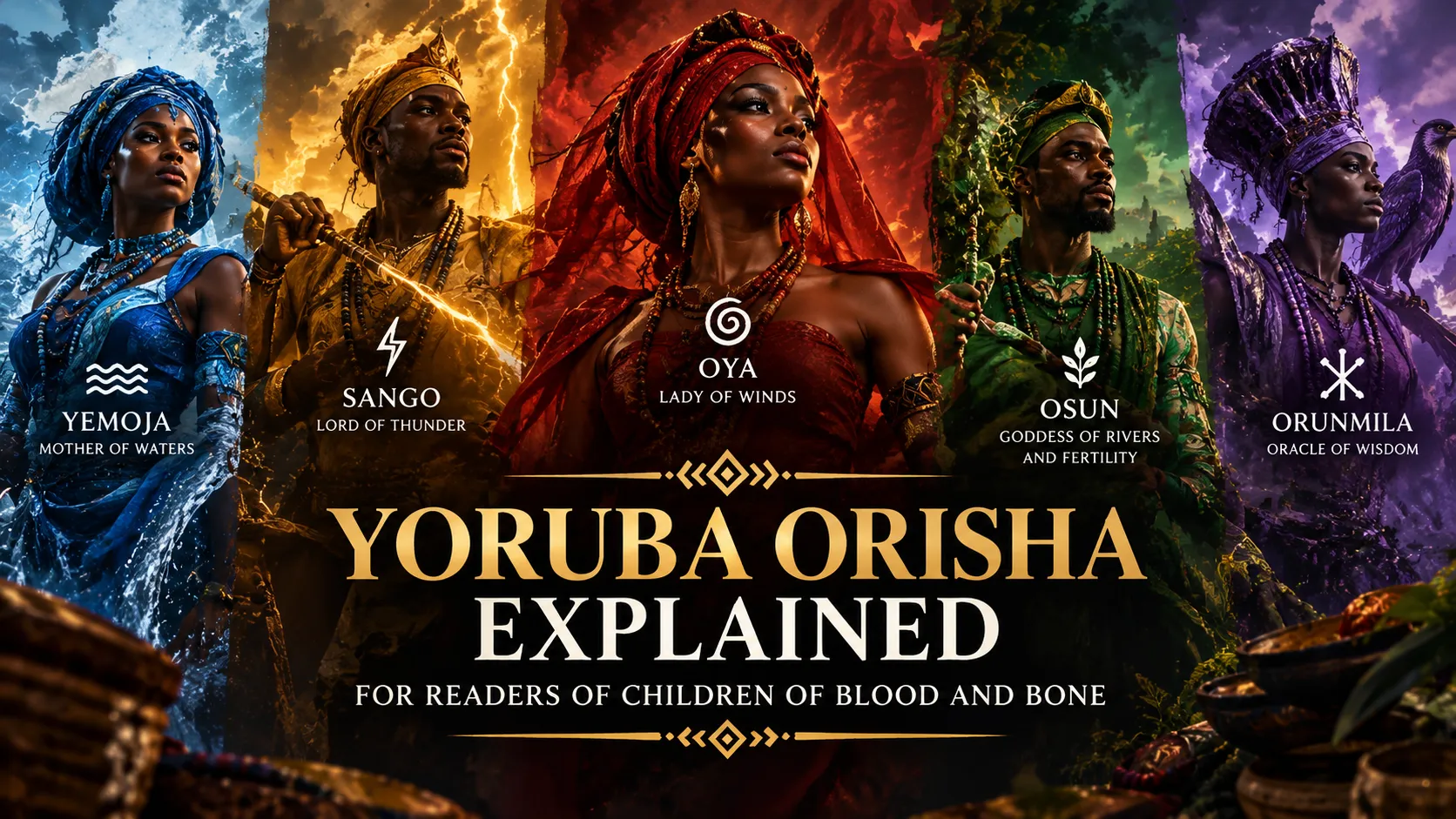
Shango is the Orisha of thunder, lightning, and justice. He was once a king of Oyo — a real historical state in what is now Nigeria — before his deification.
He is worshipped as a deity of masculine power, of moral authority delivered through fire.
In Adeyemi's world, his power manifests as electrical and storm-based abilities. His association with justice gives his aligned maji a moral weight beyond pure combat.
Ogun: Iron and War
Ogun is the Orisha of iron, warfare, labour, and the roads. He is associated with smiths, soldiers, surgeons — any worker who uses metal tools. He represents raw physical force channelled through discipline.
In practical terms, Ogun's presence in the novel's magic system grounds the divine in the material world.
Iron is the substance of weapons and the substance of work. His domain includes both creation and destruction.
Nana Baruku: The Maternal Creator
In the novel, the solstice ritual requires a connection to Nana Baruku, described as a maternal creator deity.
Nana Buruku is a real figure in Yoruba-derived traditions — an ancient Orisha associated with creation, the primordial, and the relationship between life and death.
Her appearance in the novel situates the story's central quest within a cosmological framework that goes deeper than any single Orisha.
Frequently Asked Questions
Are the Orishas still worshipped today?
Yes. Yoruba religion and its diaspora traditions have tens of millions of active practitioners worldwide.
Is Orisha worship related to Voodoo or Santería?
They are related but distinct. Santería (Lukumí) in Cuba, Candomblé in Brazil, and Haitian Vodou all have roots in or connections to West African traditions, including Yoruba.
They are separate traditions with their own distinct practices, though they share some common ancestry.
No comments yet. Be the first to comment.